There’s one big difference between the poor and the rich,” Kite says, taking a drag from his cigarette. We are in a pub, at lunch-time. John Kite is always, unless stated otherwise, smoking a fag, in a pub, at lunch-time.
“The rich aren’t evil, as so many of my brothers would tell you. I’ve known rich people – I have played on their yachts – and they are not unkind, or malign, and they do not hate the poor, as many would tell you. And they are not stupid – or at least, not any more than the poor are. Much as I find amusing the idea of a ruling class of honking toffs, unable to put their socks on without Nanny helping them, it is not true. They build banks, and broker deals, and formulate policy, all with perfect competency.
No – the big difference between the rich and the poor is that the rich are blithe. They believe nothing can every really be so bad. They are born with the lovely, velvety coating of blitheness – like lanugo, on a baby – and it is never rubbed off by a bill that can’t be paid; a child that can’t be educated; a home that must be left for a hostel, when the rent becomes too much.
Their lives are the same for generations. There is no social upheaval that will really affect them. If you’re comfortably middle-class, what’s the worst a government policy could do? Ever? Tax you at 90% and leave your bins, unemptied, on the pavement. But you and everyone you know will continue to drink wine – but maybe cheaper – go on holiday – but somewhere nearer – and pay off your mortgage – although maybe later.
Consider, now, then, the poor. What’s the worst a government policy can do to them? It can cancel their operation, with no recourse to private care. It can run down their school – with no escape route to a prep. It can have you out of your house and in a B&B by the end of the year. When the middle classes get passionate about politics, they’re arguing about their treats – their tax-breaks and their investments. When the poor get passionate about politics, they’re fighting for their lives.
Politics will always mean more to the poor. Always. That’s why we strike and march, and despair when our young say they won’t vote. That’s why the poor are seen as more vital, and animalistic. No classical music for us – no walking around National Trust properties, or buying reclaimed flooring. We don’t have nostalgia. We don’t do yesterday. We can’t bare it. We don’t want to be reminded of our past, because it was awful: dying in mines, and slums, without literacy, or the vote. Without dignity. It was all so desperate, then. That’s why the present and the future is for the poor – that’s the place in time for us: surviving now, hoping for better, later. We live now – for our instant, hot, fast treats, to pep us up: sugar, a cigarette, a new fast song on the radio.
You must never, never forget, when you talk to someone poor, that it takes ten times the effort to get anywhere from a bad post-code. It’s a miracle when someone from a bad post-code gets anywhere, son. A miracle they do anything at all.

A rant about the divide between the rich and the poor from “How To Build a Girl” by Caitlin Moran (via itsalljustvapourtrails)

“When the rich get passionate about politics, they’re arguing about treats. When the poor get passionate about politics, they are fighting for the lives.”

Boom

(via seneddism)
Stimming is not just a coping mechanism

realsocialskills:

I see this defense of stimming a lot:

  • It’s wrong to train autistic people not to stim
  • They use it to compensate for overload
  • Or to focus
  • Or to compensate for other problems
  • Or to express distress

All of this is true. But it also misses the point. Stimming isn’t just a coping mechanism. It’s much more than that. Stimming is a positive part of autistic experience, not an unfortunate-but-functionally-important thing we have to do.

Imagine if facial expressions and tones of voice were considered wrong, and someone defended them this way:

  • It is wrong to teach children to adopt a flat affect
  • Children need to be able to frown
  • Children need to be able to indicate through the tone of their voice that something is wrong
  • Children need to be able to cry. That’s a way of coping with pain and overload

All of those things are true. But if that’s all defenders of tone and facial expression said, it would be horribly misleading. Body language and tones are more than that, and they are good.

Stimming is like that too.

  • Stimming is not just necessary. It is also natural, and good
  • Flapping in response to a nice texture is not fundamentally different from smiling in response to the smell of a flower
  • Rocking in response to someone saying something offensive is not fundamentally different from frowning in response to a slur
  • It is ok for autistic people to have autistic body language

limitingwhimsy:

thedatingfeminist:

basically:

  • it is not a virtue to not set boundaries
  • ignoring your own wants and needs is not a healthy way to show love
  • people worth loving will respect your boundaries
  • people worth loving will not want you to set aside your own wants and needs to make them more comfortable
  • ‘having no boundaries at all’ describes a person who is very hurt, not a person who is very virtuous
  • suffering for others’ comfort is not how you be a good person, it is just how you become very hurt
  • sometimes you need to make others uncomfortable in order to get your needs met
  • your needs are more important than others’ comfort
  • your comfort is equally important to others’ comfort
  • making other people uncomfortable is not, in itself, ethically wrong or morally dubious

can i add a thing: 

what really helped me with boundaries is to realise that not having/showing them didn’t just hurt me, but also hurts my friends. and that interacting with someone that doesn’t state their boundaries is not at all ‘comfortable’ or ‘easy’. that’s a perspective that was so alien to me, i never realised other people might genuinely want to know about boundaries, and be genuinely distressed about overstepping them. but when i did, it really changed how i approached this!

‘my needs are more important than others’ comfort’ is absolutely true, but can be hard to embrace. but what about: ‘if i don’t state my needs, that makes interacting with me more difficult and hurtful’?
we don’t usually want people we care about to hurt for our sake. if we find out that they did, we’ll feel really bad and guilty, like we should have been able to prevent it by being more attentive. guilt ping-pong can happen. everybody gets to feel toxic. that’s not good!  

also, if i don’t state needs and wishes, i leave the onus of steering everything to the other. if they care about my needs and wishes, it is now their job to gently pave the way for me, to make me feel safe enough to express them, or, worst, to somehow guess them, and none of this is making it especially easy for them, on the contrary! 

it can be very hard and it’s okay that it’s hard. (like you’re not being “unfair” by being bad at stating boundaries forex.). but, basically, establishing boundaries and needs isn’t just good for me, but it’s good for both, and

in healthy relationships

will often make both equally more comfortable. sometimes it’s not ‘my needs vs. your discomfort’, sometimes it’s a win-win. 

violent-darts:

island-delver-go:

thelibrarina:

tsreena:

baby: *incomprehensible babbling*

me: WHAT!? really??? no way :0

This is actually really good for babies’ brain development. You’re laying the groundwork for conversation, teaching them through example that people take turns talking and listening.

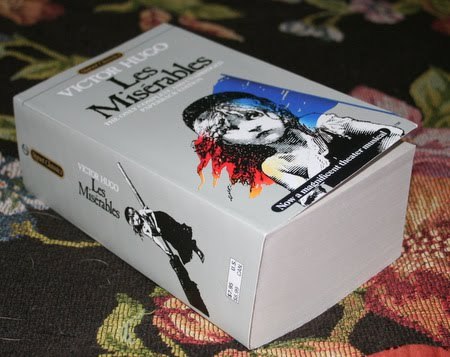
Did you know that babies from affluent families hear an average of thirty MILLION more words before age 5 than babies in families below the poverty line? For context, Les Miserables is about 650,000 words and it looks like this:

So it’s like reading this book 46 times.* And that’s not the total number of spoken words, that’s the GAP between affluent and poor babies. And these are the years in which the brain undergoes the most development. It’s mind-boggling.

So what I’m saying is: keep doing the thing. Do it to all babies, all the time. Narrate your day. Ask them for opinions. (“Should we buy the large bag of potatoes or the small bag?” “Gaabooglagje.” “Yes, just as I thought.”) Point out colors and shapes and letters. Let them scribble outside the lines and treat their babble like talk. Sing them nursery rhymes and Raffi songs and songs from the radio. All of these things are going to build their brains to prepare them for kindergarten and beyond.

*Please do not read Les Mis 46 times to an infant. They don’t even care about the Parisian sewer system.

And they never will with THAT attitude

Actually the “word gap” study is kinda garbage, with crap methodology and so, so many structural flaws that all you can really say about it is “their science is bad and they should feel bad.” 

Also kinda racist, pretty ethnocentric, hella classist, weirdly privileges Anglo-monolingualism (which is absolutely counter to like … all the other research, ever) and generally not a great thing to use as your frame: 

Michaels says, “The deeply destructive, pernicious thing about the Hart and Risley study is that it presents what seems like totally rigorous, careful, objective science (what under careful inspection is nothing more than pseudo-science)—that gives teachers, educators, policy makers the ‘proof’ they need to believe that these poor kids aren’t smart, aren’t good learners, don’t have adequate language to think well with” (p. 35).  As librarians, when we cite the 30 Million Word Gap, we run the risk of continuing to enforce the bias and classism that this study did, as do some of the initiatives that have cropped up around this study. “In effect, the word gap interventions propose that improving social and economic outcomes for poor and minority families can be as simple as training them to act more white and middle-class (and monitoring their compliance with a ‘word pedometer’)” (Saiyed, 2015). While Babies Need Words Everyday does not go as far as to install word pedometers on parents, and instead simply encourages them to speak with their babies, the issue is very different – but by using word gap and deficit thinking, we may be treading in dangerous territory.

Also they, like. LITERALLY coded their data-analysis so that only “good” word-interactions were counted, where “good” = “matched white American middle-class politeness structures”. I am not even joking. 

I super recommend reading not only the ALSC post I linked above, but also a lot of the stuff she’s linked in it

That said, talking to your babies is a great idea! Interacting with babies is fantastic! It’s very good for them. You’re modelling communication and helping to build actual literacy skills, and the more you can do that, the better. They don’t actually need to “understand” exactly what you’re saying: the point, as the poster above correctly notes, is that you’re establishing how communicating by language works, what the STRUCTURES of communicating by language are, and all the other things about how it works. 

It’s the framework of that stupid study that’s pathological in a lot of ways: firstly the idea that you can hammer the whole thing down to numbers of words at all (which is a bad idea and ignores visual literacy and other factors that are extremely important to both language acquisition and emergent literacy when they’re older which can often be much more important than straight up word-exposure) and the idea that somehow just sheer volume/quantity of vocabulary is the important part; secondly the idea that this is intrinsically linked to poverty or working-class status (see: deficit thinking above); thirdly that it’s useful to frame this as “omg SOMETHING IS HORRIBLY WRONG HERE IS WHAT YOU MUST DO TO FIX IT!” rather than “hey you know what’s important and awesome for your kid? talking to them and interacting with them and mimicking and back-and-forth like conversations with them! Do it lots!” 

TEAL DEER: Yes that pattern is totally great, continue to talk to your babies like that! But at the same time, the word-gap study is garbage and toxic and should not be cited! 

soulsoaker:

rattlecat:

scientia-rex:

lysanderish:

I get so mad about people who insist that doctors went to med school so they can never be wrong about your health like ???? Some Doctors hate fat people??? Some doctors hate the mentally ill or give Helpful NT Advice instead of treatment??? My ob/gyn took four years and a strong arm from my mom to figure out I had pcos???

Doctors are not gods??????

I am a med student, literally currently going to medical school, and doctors are about 15% wonderful people who Care So Much It Hurts, about 60% Eh I Was Optimistic But Ill-Informed When I Chose This Life, and a solid 25% What The Fuck Is Wrong With You You Fucking Fucks Get The Fuck Out Of Medicine Oh Wait You’re Just Going To Retire After Decades Of Being A Bigoted Fuck-Up.

Doctors need to be held accountable. Right now, doctors are virtually never held accountable.

There are doctors who tell lesbians not to worry about STDs because they “can’t get any.” There are doctors who tell fat people to lose weight when what’s wrong is actually a) completely unrelated to weight and b) fatal. A doctor once refused to give me an IUD because I should “marry a nice young virgin man” instead of being a big ol’ queer slutbag. In my summer job reviewing medical records, I’ve seen three patients who were sent home with a disease that almost immediately killed them because the doctors (three different ones!) didn’t take CHEST PAIN seriously. One of my classmates, a future doctor, told me I was overreacting to the murder of Michael Brown and when I said the hell I am he said I must not UNDERSTAND THE ISSUES. Oh, I’m sorry, I forgot my master’s degree in social psychology is just there to decorate my shelf! My tiny lady-brain can’t possibly comprehend anything important! I once heard a doctor brag about having forcibly sterilized a Latina woman who didn’t consent because she was an undocumented immigrant and “she had too many already.” He was receiving a LOT of federal research funding for his work with our research group. I’ve WATCHED doctors be horrible, bigoted fuck-ups.

Like, if these are things someone like me, who passionately believes in medicine to the point where I’ve willingly sacrificed a reasonably comfortable job, my free time for at least seven years of training, and my right to decide where I spend at least three years of my life (because we are obligated to go wherever we’re matched for residency), is seeing at one of the top academic medical centers IN THE WORLD, what the FUCK do you think is happening in the REST of the country, where they HAVEN’T attracted “top talent”?

Doctors are not better than other people. We just have less transparency and less accountability. That needs to change.

Not to mention the rather abundant percentage of people who solely go into the medical field because it makes money. I mean really, how many times have your parents suggested you go to college to be a dentist, a doctor, a nurse, or some technical field that for some reason is tied to the medical field and requires you to work in a hospital or a clinic?

don’t forget how a lot of doctors believe they went to med school to earn authority and social prestige

Emotional Consent

qcrip:

I’ve always been hesitant to post about this because I’m worried people will take it as a personal offense and I just want to say in advance this isn’t “@ anyone” or a callout even

I just feel like emotional consent as a concept is rarely talked about and therefore it’s often breached unknowingly (hence why I don’t never get mad at anyone specific for breaching it), and also I think it’s important I make this post. I didn’t learn what it was till I was older, and most people don’t.

Essentially “emotional consent” is a mutual understanding and willing agreement between both parties when discussing directly emotional or potentially emotionally loaded questions.

I’m going to start with examples, and I know it might feel bad at first if you recognize you do some of them (it’s okay, we all do from time to time), but please keep reading because I promise I’ll get onto alternative dialogues and solution

Here are some examples of what a breach of emotional consent can look like- not all the ways of course, but the major ones off the top of my head:

  • Venting to someone without warning or established boundaries this can look like starting a conversation by venting, or detailing graphic information seemingly out of nowhere and without effective trigger warnings. This can put people in situations where they feel like they have to respond, even if they’re not emotionally equipped, if they’re busy, or if they don’t have the spoons. Of course, usually this wasn’t the intent of the venter, but still has the same effect. FYI- this includes celebrities, social media icons, and people you admire. 
  • Talking graphically about sex, masturbation, or anything in that range without warning or established boundaries this can look like anything from sharing a funny sexual escapade with your friends, and dirty jokes, to sexual harassment and telling someone hows bad you want to fuck them despite not knowing how they feel about it. Sometimes in these scenarios, people can appear visibly comfortable in attempt to fit in and not seem prudish, or to avoid awkward confrontation. This can also be especially sensitive because this is a topic that can very easily and unexpectedly bring up traumas and insecurities along with the discomfort, and it can perpetuate rape culture.
  • Using pet-names and romantic implications, even platonically, without established consent this one was tough for me to swallow at first because I love pet names and I love using them platonically to show love. But even more, I want the people I love to feel comfortable and safe around me. Some people have deeper more negatively charged, or more intensely charged feelings around pet names than I do, and I wouldn’t want to subject them to that. Some people are also comfortable with certain pet names and not others. Also things like calling platonic meetups dates, cuddling, and platonically holding hands mean different things to different people, which is important to respect.
  • Showing people media or sending articles or news with heavy emotional content either without warning, or with the expectation of discussion part of this is about including trigger warnings, and making sure viewing triggering content is optional in spaces and interactions we have control over. Another part though, is the fact that we often expect people to have interactions and discussions with us about emotionally charged topics, including politics, crime, oppression, natural disasters, etc. without fully understanding how this can affect the other person.
  • Telling someone they’re the only person you feel comfortable telling something to, or be open with this one sucks because it usually (except in cases of abuse) comes out of genuine care and wanting to make the other person feel special. That being said, no matter how you phrase it, it can put a massive responsibility on the person that similar to my first example, can make them feel obligated to help even when they’re not in an appropriate place to. 
  • Expecting people to share personal or intimate information a lot of times we ask emotionally loaded questions because we care about and are interested in the lives of our loved ones. That being said, if we’re not careful people can really feel obligated to share information they’re not prepared to, or don’t want to process at the moment. This can look like “How’s your health been?” “How are you handling [life event]?” and “Why didn’t you tell me sooner?”

so now the more pleasant part! What can it look like to prioritize emotional consent instead- these correspond in order of initial bullets

  • Starting vague and asking if it’s okay an example dialogue could be “I’m feeling crappy about [blank] are you up to listen to me talk about it?” I also love to add “or should I try [alternative coping method/talking to someone else right now?]” to the end of that if I have one so the other person knows if they say no I have something to turn to. Another example could be “Would it be alright for me to vent right now? FYI it may include mentions of [possible triggers] so if you’re not up for it right now I understand?” or simply “Are you comfortable with me talking about [blank?]”. Also talking to a celebrity or idol “You really helped me with [blank]. I don’t know if you’re comfortable with detail so I won’t elaborate, but I really appreciate it.” or “You really helped me with [blank.] [An explanation about what specifically helped or inspired you in more detail rather than graphic description of the event.]”
  • Again! You can just ask example dialogue can include “Can I mention something about my sex life?” “I have a joke but it’s dirty so I want to make sure thats okay with you” “Can I say something nsfw?” “Is everyone here okay with sex mentions?” 
  • Asking still works! Example dialogue can be “Thanks [petname] (are you okay with me using that or would you rather I don’t)” “Are you okay being called [petname]?” “Are you comfortable with [intimate platonic act]?” “Do you want to [intimate platonic act]?” “I’d like to [intimate platonic act] if you’d be okay with that”
  • Ask/Warn ahead of time or clarify you don’t need response example dialogue “I want to process [news event] but I know it’s heavy so I wanted to ask first” “Jsyk this article contains [possible triggers] so don’t read it if you think it’d be harmful to you]” “Can I ask your opinion on [charged topic]. If you’d rather not, I understand” “[thought or link to article] FYI no need to respond. I just wanted to share.]”
  • Show you’re appreciation in other ways using phrases that show appreciation but don’t implicate responsibility like “Thanks for being here for me whenever you’re able to” “I really appreciate being able to talk about this with you” “It means a lot to me that I can feel so comfortable and open with you” “Being able to talk about this with you has been really helpful for me and I’m really glad I was ables to.”
  • Asking with an easy out or optional response examples include “Hey, I know you’re dealing with as lot and grieving right now so I absolutely don’t need a response, but I wanted to remind you if you need support in any way I’m available and have time right now.” “Do you want to talk about [emotionally charged life event] or would you rather talk about something else right now?” “I know it’s hard to talk about these things and I understand if you can’t, but I want to remind you that when you can and want to I’m available and won’t judge you.” “Would venting be helpful or draining right now?” “What’s the best way I can support you, or are you not sure right now?”

Sorry this became a long ass post but I thought it was important. I should also add that the exception of course is therapists and counselors, crisis hotlines, or other people trained and already prepared to cope with these things. but besides that- try and emo responsibly. 

Slashdot headlines written by neural network

lewisandquark:

The news site Slashdot (“news for nerds, stuff that matters”) is celebrating its 20 year anniversary this October. What could be geekier than celebrating with the help of an open-source neural network?

Neural networks are a type of machine learning program that learn by example, rather than by a human programmer feeding them rules. Whatever the headlines contain, whatever common words and rhythms, a neural network will do its best to imitate. I’ve trained an open-source neural network called char-rnn to imitate all kinds of human things, like paint colors, guinea pig names, and craft beer names.

Slashdot sent me a list of all the headlines they’ve ever run, over 162,000 in all, and asked me to train a neural network to try to generate more.

I used a neural network called char-rnn, an open-source neural network by Andrej Karpathy, and trained it separately on the first and second decades of Slashdot headlines. Let’s see what it learned!

Decade 1: 1998 – 2007

Alternuting Your Computer
The Internet Spectrum Violated
Microsoft To Develop Programming Law
Star Trek Creates Free Memory
Launching the Linux Group Socially
Microsoft Releases New Months
More Pong Users for Kernel Project
Nintendo Goes Canadian Edition to Customers
New State of Second Life
Sexual Security To Allow Australia
Programming Supercomputer Library In Star Wars
What are The Final Fantasy
Review of the Wireless Monster?
Portable Mail With Spidey Law
New 5400 GPL Formed into An Internet
Dvorak on Mario Games?
Half-Life 2X Speed Released
Ban Manhunt 2 Better than Linux?
Vista Releases Denial of the Mumble
New Company Revises Super-Things For Problems
The Dead of Managing Moneys?
Judge Releases Sony Practices in Death
Doom’s On Worldwire Networks
Sun Releases Enterprise in Smackware
I Wants To Control of the Net
Nintendo Can Start in the Wild Button?
Secondors Talk Open Source For Super-Bork?
AOL On Beam Doubt

Some familiar personalities of the tech industry make an appearance:

Microsoft Releases Bill Gates Service Start
Steve Jobs To Be Good
Shatner Awards Up Towards A Game Car Challenge

Cell phones appear to be have been weird in the early days:

Stem Cell Phone Standards in Space
Why Are Blow Systems Taking Your Phone?
New Unreal Tournament Phone Reviews Doubts
Forget To Support Flat Spam Phone

And you find companies doing rather unexpected things: 

Microsoft Announces Mac OS X Released
Intel Releasing Linux In A Networks
Sun Upgrades Apple Devices
Corel Launches $100 Laptop
Microsoft Announces Firefox Portal
Mozilla’s Audio Caroffice
Apple Finally Launches Microsoft

I produced the above headlines by allowing the neural network a high creativity setting, so it could range over many different headline topics that it’s seen over and over. But it’s also fun to turn the creativity down near zero, so the neural network can try to generate the most quintessential headlines:

All The Company Programming Software Software?
Some Computer Computer Solution of the New Company Computer
More Anti-Spam For Software Computer
Mac OS X Interview with Linux Computer
Mac OS X Accused of the Business
Sony Plans To Start Patent System For All Time
Security Hole For Security Hole
Security Hole in the Star Trek
Computer Computer Computer Computer Software?

Decade 2: 2007 – 2017

The neural network had a tougher time with decade 2 – it seems the headlines became longer and more complex, as Slashdot experimented with new formats and new topics.  The neural network struggled to create grammatical headlines as a result. But it still did its best to reflect the new topics of the last decade. Compared to the late 1990s and early 2000s, some companies and topics disappeared, while the coverage of Apple in particular exploded. Star Trek and Star Wars, however, remain perennial Slashdot favorites.
Here are some neural network-generated headlines for 2007-2017:

Twitter Discovered In the Pirate Bay
Google Bacon Medal To Contract Computational Lab
Scientists Discover Free Wi-Fi Store In the US
Steve Jobs Sues Death of the Future
Apple Seeks To Be Become Windows 10 Has Been Control the Desktops
Stanford Computer Scientists Develop Super Man Sales For Computer Science
Star Wars Hacked In Life On the iPhone
Computer Finds Court Broke Math For Secret Company
How Do You Design To Stay Them Bomb
Ask Slashdot: How Clinton Uses Display For Android Chips On Netflix Court From the Jobs
People ‘Fork" At a Flaw Refused
The Pirate Bay Tracking Storage Security For Windows 10
German Porn Update To Compete At CNSR Healthy Court Says
Supreme Court Can Be Lingeries
Apple Says the Moon Project To Pay $1.7 Billion For Free Software
Steve Jobs Allowed To Deal With Solar Power
Apple Sues Apple To Get Flash Mathematics
Microsoft Slashdot: How To Build a Bad Privacy For Windows 10
Twitter That We Use Facebook To Receive The Life
Linux Kernel 3.1.0 Launches In Late, Facebook To Sue Star Trek
The One-Department For Alleged For Connectivity: 3-D Printed Baby
Black Hole Proposed

My favorite part, though? The Slashdot headlines that appeared to come from an alternate, much more advanced, somewhat terrifying timeline:

Google Returns To the Space Station
Mac OS X Project Announces Space Station
Sony Announces Mars Rover Release
Google Patents Intelligent Space Telescope
Officials Release Android Apps For New Space Telescope
Star Trek Control of the Wild Start Up
Scientists Army Interviewed
Company Computer Releases Cloning Crime
Building A Nano-Tech Back
Full Life On The Linux
Chernobyl Announces Company And Educators
SGI Launches Space Station
FreeBSD Base Scientific Hits the Moon
Red Hat Releases Linux Games And Moon
Apple’s Moon Review
About New Moons of a Company
Looking For Mars Landers to Linux
Mars Rover Set for Alien China
Congress To Buy Mars Mister
Building a Top 100 Company For Mars
Apple Considering Debut in People Processors
Apple vs. Biology Details
An Android Bans Secret Project For Console Devices
Your Own Portals
U.S. Considering Death of the Solar System
Black Holes from Digital Dell
Black Hole Sension of the Linux
Microsoft’s Lab Changes “Space”
IBM Moves to The Matrix
Super Planet Wars Solved

The quintessential headline, though? When I trained the neural network with all 20 years of Slashdot headlines, then turned down the creativity level to near zero, I reveal the following essential Slashdot headlines, distilled from 20 years of technology news:

Sun Sues Open Source Project Content
Sun Sues Anti-Spam Computers
Sun Sues Security Flaw Contest
Sun Sues New Star Trek To Stop The Math
Sun Sues Anti-Spam Standards And The Star Wars To Stop Computers
Star Wars Companies Are Streaming the Star Wars
Star Wars To Support Linux Development
Apple Settles The Future of Star Wars
Apple Releases Secure State of the World
Apple Sues Apple To Start The Solar Power Project
Sony Sues Apple Server For Seconds Off From SpaceX Project
Ask Slashdot: Do We Want To Be the Computers?
The Desist of the Planet

Want 4 more pages of Slashdot headlines from the neural network? Sign up here and I’ll email you a pdf.

Also: POLL! I’m collecting names of Halloween costumes for training a future neural network. Enter as many as you like (no email address required).

socialjusticevegan:

elodieunderglass:

star-anise:

violent-darts:

star-anise:

Petition to fucking salt and burn the concept of “attention-seeking behaviour” as something intrinsically bad in children

To elaborate: If a child especially* is seeking attention, it’s because they fucking need some attention. “Attention and interaction from adults” is a non-negotiable neurological need. It is as important as food and water and clothing and a place to pee. 

There will be times when a child seeks attention that are Unfortunate, either because now is not a good time for attention, or because the manner in which they are trying to get the attention is Unfortunate. See also “TALK TO ME WHEN YOU ARE ON AN IMPORTANT PHONE-CALL” and “I WILL GET YOUR ATTENTION BY SCREAMING AND BREAKING YOUR STUFF.” 

But here’s the trick: if they are seeking attention then, and in that way, that means that they are not getting attention they need otherwise. And not reinforcing the bad behaviour is only half the solution. The other half is giving them attention in other ways and responses to other things

If the only way that a child gets attention is by acting out? They will act out. Their all-powerful lizard-brains (which are absolutely, in children, VERY POWERFUL) will eventually literally just see the negative consequences of the behaviour as the price to pay for getting the attention their brains absolutely need as much as their bodies need food and water and to take a piss. 

You cannot get out of the absolute responsibility to give a child under your care regular positive attention and interaction. If the child under your care is starting to show bad attention-seeking behaviour? That is a fail-proof diagnostic that on some level that child is not getting the attention and validation they need. 

This does not mean that you do things that will tell them “yes, behaving this way will get you good attention.” But it does mean that you need to start showing them how to get more good attention from you

You have to start teaching, “No, you cannot crawl all over me when I’m on the phone – but when I hang up the phone you can come ask for a hug or for me to look at your drawing”. YOU HAVE TO DO BOTH PARTS OF THIS. If you need a child to stop doing things like Making Messes for Attention, you have to start GIVING THEM attention for good things (and you know you might have to start at the very very bottom of the rung with “thank you so much for not making a mess today! Let’s play hide and seek!” Or something similar, but TOUGH SHIT, YOU ARE THE GROWNUP, THEY ARE THE CHILD). 

 …  and if the child in question is younger than 12 (well really 18 at least, but DEFINITELY 12) months just fucking pay attention to them, they don’t have the cognitive capacity to understand putting off fulfillment, ok? 

You know what the WORST THING possible for a baby to start doing is? Not trying to get adult attention. 

Because that means that their brains have decided that you have abandoned them in the grass for the hyenas to eat, so they’re just going to stop developing and start dissociating. And this ends up with attachment disorders that will actually cause the child great difficulties in later life.

If a baby is crying and honestly distressed, fucking soothe it already. 

(nb: yes, to some extent babies do need to learn to self-soothe; this lady has an actually sane article about this process which is a miracle, which gets into more detail about the processes involved and how it is a PROCESS, not just leaving the baby there to cry itself into hysterical exhaustion and teaching it that you won’t respond to its needs. PROCESS.) (nb2: sometimes the sleep/soothe process also gets into genuinely Medically Complicated Territory at which point you should be working with an actual paediatrician with specific training/etc, and you STILL don’t just leave the fucking baby there to scream for hours, trust me). 

This has been your swear-filled elaboration of a friend’s aggravation for the day. Tip your server. 

*adults also need attention, but adults are, well, adults: it is in fact their own responsibility to figure out how to seek attention from people who have the capacity to give it to them, at times that are good for everyone involved, etc. Children, however, are damn well children and it is the responsibility of caregiver adults to fulfill their needs and TEACH THEM how to fulfill their needs as they grow. 

*holds a lighter aloft*

That is such a good rant, I adore it and welcome it and validate it! raising a cub of my own, and caring a lot about attachment theory, has really put this into practice in concrete ways. You can actually OBSERVE the cub needing attention to make their brain grow. (sometimes, when I don’t have anything left to say/give, but the cub needs attention, I just smile and burble repeatedly, “Warm eye contact! Warm eye contact to make your brain grow!! Yeahh! Warm eye contact! Positive attention!” because I’ve run out of things to say, but the baby doesn’t know that yet, ho ho ho)

But Discoursing away from baby development, one thing I always question is the CONTEXT for which people dismiss behavior as attention-seeking. It’s always cast as this terribly bad thing, “attention-seeking,” as if people noticing you is this corrosive thing that damages you and everyone around you. This thing that should be punished, by denying attention, like:

  • “Ugh! how dare you exist!”
  • “I really hate it when babies have needs!”
  • “The worst part is when babies have needs and they EXPRESS them.”
  • “She has dyed her hair a noticeable color. Probably because she didn’t get enough attention from her father, and she is now trying to use her hair to STEAL ATTENTION from everybody else.”
  • “That outfit, which shows some skin, has attracted my attention – isn’t that awful? They should be punished, for using their visible skin to seek attention.”
  • “How dare you blog, where I can find it and see it with my own eyes.”
  • “Why are you EXCELLING at something? Ugh! Always doing it for attention.”
  • “Why are you FAILING at something? Ugh! Weren’t you getting ENOUGH attention?”
  • “That sounds complicated. I think you’re making it up. Making it up for attention.”
  • “I went somewhere and – can you believe this – there was a young person, quite a young human, MAKING A NOISE, where I could hear it, and their caretakers did not forcibly stop it from doing so!! Honestly. People should be licensed before they have children.”
  • “I just saw a reminder that some people use special accommodation [blue badge/designated parking spot/baby on board sticker/service dog/etc] and I am just so SICK of people rubbing their CONSTANT need for attention in my FACE.”

You know how in Harry Potter, whatever Harry does, his bullies and abusers say that he’s doing it for attention, so they dismiss it and mock it? If he publicly has ANYTHING, from a mild compliment to a broken limb – “Weren’t you getting enough attention, Potter?”

“Look at you EXISTING, Potter. Were you hoping to form some kind of human connection? Did you think you could exist, and occasionally need things? Well, we’ve seen through THAT pathetic ploy. REQUEST DENIED.”

It’s pretty weird, is what I’m saying. It’s kind of a thing that shitty people say.

Anyway, I’ve found it pretty liberating in my life (and good for my mental health!) to question this. Why is attention-seeking positioned as bad? Why is asking for it a good reason to be denied it? Why are certain people denied attention, such that everything they do is cast as a desperate ploy to acquire the attention they are not entitled to? How exactly does the existence of crying baby, a woman’s pink hair, or a blue badge apparently manage to suck all of the air out of the room?

Given that we are social animals who require positive attention to grow, maintain relationships, keep our mental health and do our jobs well, what’s so bad about giving it to people?

Given that so many humans are raised in such a broken way that they seek negative attention – resulting in terrible things and a broken world – what is even so terrible about people explicitly asking for attention in a positive way, with something like brightly colored hair, or by creating a piece of art for others to see?

Why is attention-seeking intrinsically bad?

In my experience this seems to be really tied in with oppression and increasingly affects marginalized groups. This absolutely includes children and minors, who most people don’t even recognize as an oppressed class, but also look at how often queer/lgbt people even mentioning their gender or sexuality gets painted as attention seeking. Or women and PoC try to talk about sexism and racism and they are accused of creating “drama” for attention. Victims of abuse are gas-lighted by being told they’re making it up for attention. People with mental or physical disabilities are seeking attention for needing access or accommodation. Marginalized animals are frequently just outright killed for exhibiting attention-seeking behaviors.

It’s a silencing tactic and a way to exert power and control over others who you think should be doing everything the way you want without taking their needs into account. It starts in infancy, and it gets so drilled into us throughout our lives that it becomes internalized and many people learn to silence themselves because they don’t want to be seen as one of those “attention seekers”. 

autisticwomanspeaks:

angelicxprowess:

How to help your autistic friends

  • Don’t make autistic screeching or “this thing is autistic” jokes ever.
  • Don’t assume our interests. Not all autistics are into minecraft and trains.
  • We are not Sheldon Cooper
  • Don’t make fun of us for stimming. We see you roll your eyes too.
  • Don’t get your information from autism speaks.
  • Don’t use the puzzle piece to support us.
  • Don’t make fun of our special interests.
  • If we ask for you to explain a joke, don’t laugh at us.
  • We don’t always understand sarcasm. Please be patient.
  • Social queues are tricky. Don’t make fun if us for getting it wrong, and if we upset you please just let us know because we won’t.
  • Instead of blue to support us, use red.
  • We can make strange sounds. Don’t mock them.
  • Contrary to popular belief, there are physical symptoms. Don’t call us gross for them (bad digestion and drooling mainly)
  • Crowd’s are evil.
  • Don’t doubt us.
  • Burnout is a real thing. Talking to people constantly or too many people can be incredibly tiring. It doesn’t mean we hate you or are bored of you we just.. get tired.

Feel free to add any

Althouhg i like to use red puzzle peacies that are anti-autism speaks and i am autistic

yeahnobutreally:

summer-wolf:

shrineart:

crow-feathers:

polykins:

stop the phrase “tattle-tale”. stop indirectly telling kids that if they speak up about someone that’s bothering them, they’re doing something bad. stop contributing to the culture of abuse.

seriously though this NEEDS to stop. my mother. a grownass woman of 59. had to ask me over and over again if I was sure it wasn’t ethically dubious for her to go to her employer and report harassment and terror tactics from a coworker because she didn’t “want to be a tattler.” stop teaching kids not to be “tattle-tales” because they will not grow out of it. 

This this this.

I hope this is okay to add but in addition to the above it can create immediate and dangerous problems for children, with other children.

When I was six years old, one of my first grade classmates bullied me relentlessly for a long time. When I tried to tell the teacher that he wouldn’t stop touching me, she told me that I was being a tattle-tale and disrupting the class. So he got worse and worse. Before I knew it, he was telling me that I had to let him destroy my school supplies because his daddy told him that women have to obey the word of men. The bullying culminated in him and his friend waiting until the teacher and all the other kids left at the end of the day, cornering me at my desk, then threatening to bring his dad’s gun to school and shoot me if I didn’t stop wearing my favorite boots.

I didn’t tell the teacher because that would have been ‘tattling’. I didn’t tell my parents until they asked why I was upset that night. I wound up talking to the principal with my dad, and the principal was shocked that I had been too scared to report a shooting threat.

I know that a lot of people might think a kid would definitely report something like that, but I didn’t. A lot of kids don’t. Please, please give kids the chance to tell you if something is wrong, don’t brush them off, make sure they know that they can come to you for help. Don’t make them think they’re a burden or a ‘tattle-tale’.

And you might think, “Oh, well kids should know the difference between tattling and getting help, they should know when something is important and when it’s not. They should know better.”.  They don’t.  A 3 year old does not know he doesn’t need to cry when he wanted the blue jelly bean or if the thing he’s trying to do doesn’t work, those things are important to him and he is expressing himself in the only way he has ever known and it is your job to teach him how to manage his emotions, not internalize them because they “aren’t important”.  

Little kids don’t know what’s important and what’s not.  As they get older they learn, but if you just tell them to quit complaining and deal with shit, that’s what they’ll do until it’s bigger shit that does matter and now it’s your fault that your kid feels like he/she can’t express themselves when frustrated or scared or angry or whatever.  You might think  “Well, he’s 5 now, he should know.”  Just, inherently?  By osmosis?  Did you even hold a child-rearing book against his head to increase the chances of successful osmosis?  NO?  Then I’m guessing you didn’t teach him that his feelings are valid but there are appropriate and effective responses, and which those are.

Also:  Stop bullying your fucking kids into being bullies.  “Man up” and “Deal with it” are not appropriate parenting techniques.  You just told your kid that his/her problem doesn’t matter and they should just cram it deep down and stop bothering you with their emotions.  

Yeah, you’re old as fuck and your kid’s problem seems stupid and asinine, but your kid isn’t old as fuck and that problem is new and they don’t know what to do about it.  Don’t be a dick.