the thing you need to realize about localization is that japanese and english are such vastly different languages that a straight translation is always going to be worse than the original script. nuance is going to be lost and, if you give a shit about your job, you should fill the gaps left with equivalent nuance in english. take ff6, my personal favorite localization of all time: in the original japanese cefca was memorable primarily for his manic, childish speaking style – but since english speaking styles arent nearly as expressive, woolsey adapted that by making the localized english kefka much more prone to making outright jokes. cefca/kefka is beloved in both regions as a result – hell, hes even more popular here
yes this
a literal translation is an inaccurate translation.
localization’s job is to create a meaningful experience for a different audience which has a different language and different culture. they translate ideas and concepts, not words and sentences. often this means choosing new ideas that will be more meaningful and contribute to the experience more for a different audience.
There was an example during late Tokugawa period in Japan where the translator translated, "Я люблю Вас” (I love you), to “I could die for you,” while translating
Ася, (
Asya) a novel by Ivan Turgenev. This was because a woman saying, “I love you,” to a man was considered a very hard thing to do in Japanese society.
In a more well-known example,
Natsume Soseki, a great writer who wrote, I am a Cat, had his students translate “I love you,” to “the moon is beautiful [because of] having you beside tonight,” because Japanese men would not say such strong emotions right away. He said that it would be weird and Japanese men would have more elegance.
Both of these are great examples of localization that wasn’t a straight up translation and both of these are valid. I feel like a lot of people forget the nuances in language and culture and how damn hard a translator’s job is and how knowledgeable the person has to be about both cultures. [x]
Important stuff about translation!
Note that you can apply this to your own translations even if they aren’t big pieces of literature or something. Don’t feel bad about not translating word for word. An everyday sentence may sound odd translated literally – it’s okay to edit a little bit so it feels right!
Oh my god, I’m about to go on a ramble, I’m sorry, I can’t help it, the inner translation nerd is coming out. I’m so sorry. The thing is–there is actually no such thing as an accurate translation.
It’s literally an impossible endeavor. Word for word doesn’t cut it. Sense for sense doesn’t cut it, because then you’re potentially missing cool stuff like context and nuance and rhyme and humor. Even localization doesn’t really cut it, because that means you’re prioritizing the audience over the author, and you’re missing out on the original context, and the possibility of bringing something new and exciting to your host language. Foreignization, which aims to replicate the rhythms of the original language, or to use terminology that will be unfamiliar to the target culture–(for example: the first few American-published Harry Potter books domesticated the English, and traded “trousers” for “pants”, and “Mom” for “Mum”. Later on they stopped, and let the American children view such foreignizing words as “snog” and “porridge.”)–also doesn’t cut it, because you risk alienating the target readers, or obscuring meaning.
Another cool example is Dante, and the words written above the gates of hell: Abandon hope, all ye who enter here.
In the original Italian, that’s Lasciate ogne speranza, voi ch’intrate. Speranza, like most nouns in latinate languages, has a gender: la. Hope, in Italian, is gendered female. Abandon hope, who is female. Abandon hope, who is a woman. When the original Dante enters hell, searching for Beatrice, he is doomed, subtly, from the start. That’s beautiful, subtle, the kind of delicate poetic move literature nerds gorge themselves on, and you can’t keep it in English. Literally, how do you preserve it? We don’t have a gendered hope. It doesn’t work, can’t work. So how do you compensate? Can you sneak in a reference to Beatrice in a different line? Or do you chalk her up as a loss and move onto the next problem?
You’re always going to miss something–the cool part is that, knowing you’re going to fail, you get to decide how to fail. Ortega y Gasset called this The Misery and Splendor of Translation. Basically, translation is impossible–so why not make it a beautiful failure?
My point is that literary translation is creative writing, full of as many creative decisions as any original poem or short story. It has more limitations, rules, and structures to consider, for sure–but sometimes the best artistic decision is going to be the one that breaks the rules.
My favorite breakdown of this is Le Ton Beau De Marot, a beautiful brick of a translator’s joke, in which the author tries over and over again to create a “perfect” translation of “A une Damoyselle Malade”, an itsy bitsy poem Clement Marot dashed off to his patron’s daughter, who was sick, in 1537.
This is the poem:
Ma mignonne, Je vous donne Le bon jour; Le séjour C’est prison. Guérison Recouvrez, Puis ouvrez Votre porte Et qu’on sorte Vitement, Car Clément Le vous mande. Va, friande De ta bouche, Qui se couche En danger Pour manger Confitures; Si tu dures Trop malade, Couleur fade Tu prendras, Et perdras L’embonpoint. Dieu te doint Santé bonne, Ma mignonne.
Seems simple enough, right? But it’s got a huge host of challenges: the rhyme, the tone, the archaic language (if you’re translating something old, do you want it to sound old in the target language, too? or are you translating not just across language, but across time?)
Le Ton Beau De Marot is a monster of a book that compiles all of Hofstader’s “failed” translations of Ma Mignonne, as well as the “failed” translations of his friends, and his students, and hundreds of strangers who were given the translation challenge (which you can play here, should you like!)
The end result is a hilarious archive of Sweet Damosels, Malingering Ladies, Chickadees, Fairest Friends, and Cutie Pies. It’s the clearest, funniest, best example of what I think is true of all literary translations: that they’re a thing you make up, not a thing you discover. There is no magic bridge between languages, or magic window, or magic vessel to pour the poem from one language to another–translation is always subjective, it’s always individual, it’s always inaccurate, it’s always a failure.
It’s always, in other words, art.
Which, as a translator, I find incredibly reassuring! You’re definitely, one hundred percent absolutely, gonna fuck up. Which means you can’t fuck up. You can take risks! You can experiment! You can do cool stuff like bilingual translations, or footnote translations! You write your own code of honor, your own rules that your translations will hold inviolable, and fuck it if that code doesn’t match everyone else’s*. The translations they hold inviolable are also flawed, are failures at the core, from the King James Bible right on down to No Fear Shakespeare. So have fun! It’s all in your hands, miseries and splendors both.
As a translator i think the best thing to do when translating something that has no equivalent in culture is to stay as true to the text as possible. It depends on the kind of audience you have, though, but to stay on the example of the “i love you” thing: If that were me, I’d have kept it be “I love you” in Japanese, because even if a Japanese person wouldnt say this, the audience knows they aren’t reading a story that takes place in Japan. It gives them insight into another culture. I find it sad that this insight is lost in some translations. And when some part of the intention is going to be lost in translation/ you know the audience won’t understand a translation that is too straight, nothing is keeping you from adding a translator’s note.
The 75 most common words make up 40% of occurrences
The 200 most common words make up 50% of occurrences
The 524 most common words make up 60% of occurrences
The 1257 most common words make up 70% of occurrences
The 2925 most common words make up 80% of occurrences
The 7444 most common words make up 90% of occurrences
The 13374 most common words make up 95% of occurrences
The 25508 most common words make up 99% of occurrences
This article has an excellent summary on how to rapidly learn a new language within 90 days.
We can begin with studying the first 600 words. Of course chucking is an effective way to memorize words readily. Here’s a list to translate into the language you desire to learn that I grabbed from here! 🙂
EXPRESSIONS OF POLITENESS (about 50 expressions)
‘Yes’ and ‘no’: yes, no, absolutely, no way, exactly.
Question words: when? where? how? how much? how many? why? what? who? which? whose?
Apologizing: excuse me, sorry to interrupt, well now, I’m afraid so, I’m afraid not.
Meeting and parting: good morning, good afternoon, good evening, hello, goodbye, cheers, see you later, pleased to meet you, nice to have met.
Interjections: please, thank you, don’t mention it, sorry, it’ll be done, I agree, congratulations, thank heavens, nonsense.
Space: into, out of, outside, towards, away from,
behind, in front of, beside, next to, between, above, on top of, below,
under, underneath, near to, a long way from, through.
Time: after, ago, before, during, since, until.
DETERMINERS (about 80 words)
Articles and numbers: a, the; nos. 0–20; nos. 30–100; nos. 200–1000; last, next, 1st–12th.
Demonstrative: this, that.
Possessive: my, your, his, her, its, our, their.
Quantifiers: all, some, no, any, many, much, more, less, a few, several, whole, a little, a lot of.
Universal: everyone, everybody, everything, each, both, all, one, another.
Indefinite: someone, somebody, something, some, a few, a little, more, less; anyone, anybody, anything, any, either, much, many.
Negative: no-one, nobody, nothing, none, neither.
ADVERBS (about 60 words)
Place: here, there, above, over, below, in front, behind,
nearby, a long way away, inside, outside, to the right, to the left,
somewhere, anywhere, everywhere, nowhere, home, upstairs, downstairs.
Time: now, soon, immediately, quickly, finally,
again, once, for a long time, today, generally, sometimes, always,
often, before, after, early, late, never, not yet, still, already, then
(=at that time), then (=next), yesterday, tomorrow, tonight.
Quantifiers: a little, about (=approximately), almost, at least, completely, very, enough, exactly, just, not, too much, more, less.
Manner: also, especially, gradually, of course,
only, otherwise, perhaps, probably, quite, so, then (=therefore), too
(=also), unfortunately, very much, well.
CONJUNCTIONS (about 30 words)
Coordinating: and, but, or; as, than, like.
Time & Place: when, while, before, after, since (=time), until; where.
I love it too! I love it mostly because it makes me feel less overwhelmed. When you break it down like this, everything seems so much more manageable. Like, hey, I could memorize 20 words at a time (even if ‘at a time’ varies wildly for me), and just do that like ten times. That’s a HUGE chunk of a language.
(And since I have the habit of doing languages that are similar to ones I’m already familiar with, the grammar part usually comes pretty easy, too.)
I think one of the reasons the Harry Potter Epilogue was so poorly received was because the audience was primarily made up of the Millennial generation.
We’ve walked with Harry, Ron and Hermione, through a world that we thought was great but slowly revealed itself to be the opposite. We unpeeled the layers of corruption within the government, we saw cruelty against minorities grow in the past decades, and had media attack us and had teachers tell us that we ‘must not tell lies’. We got angry and frustrated and, like Harry, Ron and Hermione, had to think of a way to fight back. And them winning? That would have been enough to give us hope and leave us satisfied.
But instead. There was skip scene. And suddenly they were all over 30 and happy with their 2.5 children.
And the Millennials were left flailing in the dust.
Because while we recognised and empathised with everything up to that point. But seeing the Golden Trio financially stable and content and married? That was not something our generation could recognise. Because we have no idea if we’re ever going to be able to reach that stage. Not with the world we’re living in right now.
Having Harry, Ron and Hermione stare off into the distance after the battle and wonder about what the future might be would have stuck with us. Hell, have them move into a shitty flat together and try and sort out their lives would have. Have them with screaming nightmares and failed relationships and trying to get jobs in a society that’s falling apart would have. Have them still trying to fix things in that society would have. Because we known Voldemort was just a symptom of the disease of prejudice the Wizarding World.
But don’t push us off with an ‘all was well’. In a world about magic, JK Rowling finally broke our suspension of disbelief by having them all hit middle-class and middle-age contentment and expecting a fanbase of teenagers to accept it.
Also. Since when was ‘don’t worry kids, you’re going to turn out just like your parents’ ever a happy ending? Does our generation even recognise marriage and money and jobs as the fulfillment of life anymore? Does our generation even recognise the Epilogue’s Golden Trio anymore?
Harry and crew at Hogwarts in what is technically their eighth year, studying for their NEWTs and trying to fit back into a life they’ve half outgrown, the teachers never bothering to treat them like students under their authority anymore and half the other students going to them for Defense Against the Dark Arts lessons.
Harry shoving money at people, hey, you were a muggleborn who lost your wand to the Muggleborn Registration Committee? here have enough to buy your wand back and some more besides, you need to get your house back, how much do you need? starting a business, here have some start-up cash. injured in the final battle? take this money and get trained for a new line of work that doesn’t require legs. bitten by a werewolf? here’s money to buy potion. and he just keeps handing it out without paying any attention to it and there keeps being money there, and how the fuck is it okay that he has so much while others have to buy secondhand books and use secondhand wands?
Harry wanting to burn Grimmauld Place to the ground, and Harry wanting to donate Grimmauld Place as a home for people with bad family situations and people whose family have died and don’t want to be alone, and Harry never wanting to see Grimmauld Place again.
Harry wanting to snap at Molly’s mothering, at Molly’s being after him to cut his hair, at Molly’s invitations to him to come stay at the Burrow. Harry knowing she’s probably going to be his mother-in-law and knowing she’s lost a son and settling for pointing out that Aunt Petunia always hated his hair too, which shuts her up.
Harry and Draco walking on eggshells around each other. Harry making a few overtures of reconciliation and being rebuffed. Harry finally saying, well, be a prat then, and Draco snapping and slamming him into the wall, Muggle-style, and ranting for five minutes straight on how much it sucks to have believed in someone and been betrayed, to have lost, to have been saved by the person who defeated his side of the war, to have his dad in Azkaban and to have been handed Dumbledore’s life on a silver platter and been unable to take it, to have trusted Severus Snape and find out he was working for the other side and the war is over and Harry’s so covered in glory while Draco will never escape the stigma of having been a Death Eater when he wasn’t even a good Death Eater.
Harry looking at him and saying, yeah, that sucks, that’s fucked up. Saying, he watched Dumbledore die, watched his godfather die, lost Fred lost Mad-Eye lost Remus and Tonks, watched Cedric die because he was being too noble to take the Triwizard Cup for himself even though Cedric tried to insist. Saying war is fucked up, war fucks you up, shatters everything and you’re left with fragments that cut you open when you try to pick them up.
Draco telling Harry he’s dating Astoria, who doesn’t believe in blood supremacy. Harry telling Draco that if he likes Astoria, he should date Astoria, and he can give his kids magic and love and he doesn’t need to give them a position at the top of the social hierarchy to be a good father to them. Harry telling Draco that when he was faking being dead, Draco’s mother lied to Voldemort for him because he told her Draco was alive.
Harry taking part and giving evidence in the trials of captured Death Eaters and snatchers and others. Harry offering Lucius a plea bargain that will let him go home. Harry telling Lucius he understands people don’t like being in debt to their enemies, and if Lucius wants to hate him, that’s fine, but Harry thinks Lucius ought to go home and be with his family. Lucius saying nothing, but going home, and when Christmas break ends Draco comes back to school looking human for the first time in two and a half years.
School ending, and the whole double class of students sort of milling, cast adrift into an adulthood they’re not quite prepared for and at the same time are too familiar with. Half the flats above Diagon Alley being rented out by students in small groups and pairings who have no idea how to keep house; Diagon Alley getting an unofficial expansion as the Muggle flats nearby get rented to more of the same, with back doors leading to alleyways that lead to back ways into Diagon.
Some of the abandoned businesses in Diagon Alley getting opened by former Hogwarts students who don’t quite know what they want to do; a few of them importing Muggle concepts with a touch of magic: a store that’s a different Muggle fast-food restaurant every day of the month, a store that brings in Muggle items, Muggle music, Muggle technology. An internet cafe that serves butterbeer and Mountain Dew, cauldron cakes and Cheetos, side by side.
Knockturn Alley getting cleaned out by a new Ministry crackdown on the Dark Arts, and being taken over by those who feel shattered or tainted by the war. Stores trickle in to replace the old places, and shrines to the departed line the storefronts, here a fountain placed in memory, here a quote graffiti’d on the wall, here a mural, there a pile of flowers and trinkets. It’s a quiet place, contemplative; somehow the bustle of Diagon never touches it. Wildflowers grow through the cobblestones, and generations of future witches and wizards will grow up thinking “Nocturnally” refers to the twilight of the passage between worlds.
Hermione and Ron clashing over Ron’s expectations growing up with a mother who did everything for him and expecting a wife who’ll do the same. Hermione moving in with George and Angelina above the joke shop. (Angelina loved Fred, and is halfway in love with George; they are united in their missing of Fred. Hermione is growing to love George, who under his pranks and devil-may-care attitude is quite clever and inquisitive. The three of them make a decent vee, and Angelina can go travel with her international Quidditch team without worrying about George being neglected.)
Ron rebounding with Pansy Parkinson, of all people, who’s rebounding from Draco; their relationship being first built on a temporary cure for loneliness and rejection and an indulgence of spite at their respective exes, and then surprising them by continuing to work well once all that has faded.
Ollivander taking Cho Chang as an apprentice wandmaker. Susan Bones and Hannah Abbot undertaking the work to turn Grimmauld Place into Phoenix House, a home for abused, orphaned, and neglected magical children, squibs, homeless or familyless witches and wizards, and convalescents from St. Mungo’s.
Ginny’s first child is a daughter, with Harry’s black hair and green eyes; she indulges Harry by naming her Sev, like the boy Harry’s mother once played with when the world was new and full of wonder. It’s short for Severa, which is Latin in the old wizarding tradition, and it reminds Harry of Evans and of ever, which has about the same meaning as Always.
Draco and Astoria end up having five kids, and Draco scandalizes his younger self by loving every aspect of fatherhood times five. Daphne Greengrass, Astoria’s sister, ends up marrying Percy Weasley, which means Draco’s kids have Weasley cousins. Family get-togethers are very interesting, but somehow Narcissa and Lucius survive.
snape could’ve been an awesome teacher if he wasn’t a disgusting waste of a human being. he knew from age 16 that the instuctions that the textbooks were giving weren’t as good as they could be. he improved the potions and recorded his methods at age 16. if he weren’t such a shitbag, he could’ve either written the damn textbooks himself, or taught his students his alternate methods. he could’ve revolutionized how potions were being brewed, teaching whole generations a superior method of potion brewing. instead, he spent his time bullying children.
What a brilliant point.
Apart from the fact that canon rather hints that Snape did teach the kids the revised instructions.
Prisoner of Azkaban:
Didn’t you hear me say, quite clearly, that only one cat spleen was needed? Didn’t I state plainly that a dash of leech juice would suffice?
It’s evident from this that Snape wasn’t solely teaching from the textbook; he clearly instructed the class verbally.
Order of the Phoenix:
“The ingredients and method” — Snape flicked his wand — “are on the blackboard”
and, in another lesson:
Determined not to give Snape an excuse to fail him this lesson, Harry read and reread every line of the instructions on the blackboard
Snape doesn’t instruct them to use the textbook; he puts the instructions on the board.
Order of the Phoenix gives us some other clues.
“And I must tell you that Professor Snape absolutely refuses to take students who get anything other than ‘Outstanding’ in their O.W.L.s,”
So McGonagall knows that Snape only takes Outstandings, which means it’s been an ongoing decision – it’s not new for Harry’s year. And why would Snape get away with only taking the best?
Well:
“Moronic though some of this class undoubtedly are, I expect you to scrape an ‘Acceptable’ in your O.W.L., or suffer my … displeasure.”
He expects everyone – even Neville, Crabbe and Goyle to gain an A. That’s his absolute baseline. He doesn’t anticipate anyone getting a P, T or D – which is a huge ask, expecting his class to attain the three top grades, without any one of them getting one of the three bottom grades.
“I advise all of you to concentrate your efforts upon maintaining the high-pass level I have come to expect from my O.W.L. students”
Yet evidently, he’s been succeeding.
So doesn’t that rather suggest that he’s teaching them from his own textbook? Is it really plausible that every student would succeed, and not a single one would fail, if he was only teaching from the textbook?
After all, Umbridge says:
“Well, the class seems fairly advanced for their level,”
And the real litmus test?
Well, in Half Blood Prince,Slughorn doesn’t write on the blackboard at all. Not once. Instead, he points the kids at their books:
“Scales out, everyone, and potion kits, and don’t forget your copies of Advanced Potion-Making… .”
So let’s look at Hermione and Harry. Hermione’s potions are perfect under Snape. She can follow instructions to the letter, and she always creates a flawless potion. She enters Slughorn’s class, continues to follow the instructions from the textbook, and she flails.
In contrast, Harry was continually distracted in Snape’s lessons – usually because of their joint animosity. Harry was less inclined to concentrate, and Snape made it impossible for him to relax – and for the most part, Harry was preoccupied with other events (e.g. Triwizard Tournament).
Under Slughorn, Harry finally follows the Prince’s instructions to the letter (he can follow Snape’s instructions, as long as he doesn’t realise Snape’s at the helm), and he creates flawless potions.
It suggests that neither of them is capable of seeing instinctively what’s required; both only succeed when they’ve got the notes before them and follow them to the letter. Snape, by contrast, was an instinctive Potions maker – it appears Slughorn is teaching in the same way he always did, and we know he taught Snape – so his flair wasn’t taught to him.
It all rather indicates that Snape was teaching the kids his revised methods. It’s plausibly less apparent during the early years that we see him teaching, because presumably, the easy potions do not require intense modification.
So the fault is literally with his teaching as in dealing with children/teenagers and not mocking them. yelling at them, blatantly playing favourites and making them frightened to go to class. Not the technical side of things.
eokay so first of all: i have both. so of course i cannot distinguish between both, because both are “me”. so i’m making the distinction by what i read more often in ADHD or autism contexts.
the things i’m listing are not diagnostic criteria, just things that i have seen talked about often. you might not relate to all of them even if you have ADHD / autism. additionally, having one or a few traits of something does not mean you definitely have it, but if you go “yes! that’s me!” at most or all of them, you might check the thing out more thoroughly.
there’s a summary at the end
things that are more ADHD and less autism:
impulsivity. i get an idea and then i immediately drop whatever i am doing (often quite literally) and do the other thing. for example: i am preparing a sandwidch. i am in the process of putting butter on the bread. then i think: i want tea. in that same second i drop the knife, on the floor, turn around to the water boiler and switch it on. then i realize that dropping the knife was probably not such a good idea because it’s dirty now.
constantly forgetting what you were just doing or thinking. this is pretty much what leads to both being easily distracted and impulsivity. it’s more than just forgetting. it is completely forgetting about the idea of a thing possibly occurring. you’re having an intense, captivating tumblr chat with someone and then you go to the bathroom and it is gone from your brain. you go bake some cookies, read a book, cut your hair, and when you come back to the computer it’s ohhhhh shit i was having a conversation until i suddenly disappeared… 3 hours ago.
being unable to sit still ever. it is more than just stimming. it is stimming 120% of the time. it is doing multiple stims at the same time always. i CAN not sit still. it does not happen. i am unable to not stim.
hyperfocusing randomly. like what i am doing with this post right now. i started typing and then i got completely caught up on it and now i cannot stop and i forget the time and anything else i was going to do because this post is my world now and i. must. finish.
hyperactivity. i cannot describe this better than ALALAL ALALALA KLHADFUILSDHFJKUIEF!!!!!!!!!! LKSKSHALALALAL!!!!!!!!! it’s jumping around the room. running up the walls. sitting upside-down on your chair while screaming from laughter. spamming your twitter with 200 tweets that just say “CACTUS!!!!!!!!!! MOLAR TOOTH!!! CACTUS!!!!!!!” while laughing your ass off.
losing every object. always. misplacing objects that you were actually using just now. pencils, headphones, jewellery, coffee cup, everything. where is my phone that i was using 20 seconds ago? i have no idea. 3 hours later i find it in the laundry basket. or on some door handle. losing ridiculously large objects that you cannot possibly lose and being unable to locate them for hours. objects that i have misplaced inside a 40 square meters apartment: laundry basket, mattress, chairs, tables, small oven, computer, and many others. you get the idea.
forgetting plans and appointments and everything really. i recently learned that some people can actually keep complex plans in their heads. a fellow autistic explained me that he can remember everything he needs to do and lie it down neatly in his mind. i don’t think every autistic is as good with that as he is, but most people have some sort of idea what their next big tasks are. i don’t. i don’t even know where i wrote them down. i also forget appointments because even if i remember that i have plans for wednesday, that does not automatically mean that i realize when wednesday is happening.
addiction to distraction and entertainment. boredom is torture, and i don’t mean that as an exaggeration. sitting in a waiting room drives you up the wall, sometimes quite literally. forgetting your phone is not just irritating and means you have to read the cereal box. no. you build a tower out of the cereal boxes and jump on the table. when the party is going slow you collect all the paper flyers and fold 100 airplanes and shred the rest of the flyers to pieces. not being able to concentrate without loud music in the background.
things that are more autism and less ADHD:
sensory hypersensitivities. not just getting distracted or annoyed by bad sensory input, but actually getting hurt and deeply uncomfortable. not being able to even sit near someone with deodorant on. starting to cry whenever you get cold. ripping your shirt off because the tag was too scratchy.
sensory hyposensitivities. not being able to feel the pain from scratches. not being able to enjoy music unless it is ridiculously loud drumming against your ears, while not being hard of hearing. only being able to calm down when something is pressing against your ribcage so hard you can hardly breathe. enjoying bright flickering lights right against your eyeballs.
the bliss that stimming is. it is not just “something that feels pleasant”. it is something that makes you feel whole. it is something that puts you in a place where everything is good and right and the right stim fills you up with pure bliss. you soak it up like a sponge and you feel like you’re flying and it’s the best thing. it clears your mind and soothes your soul.
the overwhelm of sensory overload. you literally cannot function in a loud, crowded area. sensory overload makes you forget how to think. you immediately shut down or meltdown. you become helpless. you can not get yourself out of this situation safely. you get lost. you are unable to figure out a way to get out of the situation. you can get in real danger because of sensory overload if you do not have help or luck.
auditory and visual processing difficulties. needing subtitles for every movie you watch, even though you are neither Deaf nor hard of hearing. constantly going “what? say that again? HUH?? i can’t hear you over that noise!” while everyone around you is conversing easily. being unable to decipher an image quickly. being unable to read maps or flowcharts.
trouble with verbal communication. you might be nonverbal sometimes or always. you might have problems saying the right words. you might rely on scripting heavily, that means you have fixed rules of what to say in which situations. you might be unable to react if your script stops working because someone says something unexpected. you might be unable to say what you mean because you cannot find words fast enough. you might say things that you do NOT mean because you have heard them somewhere so the words are more easily found.
trouble with nonverbal communication. not being able to read tone of voice, facial impressions and allistic body language. constantly being misinterpreted because you make the “wrong” body language or facial impressions or tone. not being able to recognize irony and jokes because you can’t take the subtle hints that people give about them. not being able to interpret emojis and emoticons. not being able to recognize the difference between “hello”, “hello!” and “hello…”. coming off across as “rude”, “weird”, “scary” or something else that you are not.
being unable to figure out social rules and conventions. why do you always have to answer “fine” to the question “how are you?”? why does a person think that i hate them just because i do not like talking to them? why do people think i like them just because i was talking to them? which people do you call by their first name and which by their last name? why do people laugh about me just because i hugged my teacher? nobody laughs when i hug my friend.
relying on sameness, rules, schedules and rituals. no, i cannot drink tea out of the coffee cup. it Does Not Work. i cannot sleep without my squishy pillow. i cannot wear my Outside clothes inside. when i make a plan, things have to go EXACTLY as planned or i melt down. i cry when i lose my favourite stim toy. it can also mean: having to do the same things every day at the same time. getting overwhelmed by changes. not being able to function in an unfamiliar schedule. not being able to do things out of order. not being able to sleep with the Wrong sheets. not being able to eat from red dishes. and many others.
things that are both autism and ADHD:
needing to fidget or stim. being unable to concentrate or calm down without moving or specific sensory input. not being able to function properly when not allowed to stim. shutting or melting down when not being able to stim.
special interests or hyperfixations. “special interest” is the autism term and “hyperfixation” is the ADHD term. it means fixating on a certain subject so intensely that you can hardly think about anything else. some people learn subjects very deeply in a very short time. it means getting caught up in it. it’s what you think about in every second. like being in love, only with a subject instead of a person.
living in a fantasy world. retreating into a safe space to escape from a world that is not very kind to us. hyperfixating on a story or a fantasy world or dreamworld as an interest, either as a refuge or as a special interest or both.
trouble with socializing. being ridiculed for being “weird”. being unable to function well in social situations because of your specific disabilities. having a hard time maintaining friendships and other social relationships.
appearing eccentric. dressing and behaving in unusual ways. having unconventional interests and hobbies. being unable to connect with most other people, being the “different” person in most groups. having social positions such as the “class clown” or “the outcast” – entertaining everyone else or distancing yourself from everyone else.
appearing childlike or younger than you are. never getting rid off childlike behaviours. stimming and fidgeting because you like it or because it helps. not caring about how you look. having hobbies and interests that are seen as “childish”. impulsive actions that appear childlike. behaviour that is seen as childlike.
executive dysfunction. being unable to do things even though you really want to do them. being unable to start tasks or switch tasks. being unable to recall what you know in an unfamiliar situation. being unable to figure out the steps necessary for completing a task.
reactions to over- and understimulations. you might start to fidget or stim. you might try to get away or get angry or cry because things are too much or because there’s not enough stimulation. you might fall asleep in class because it’s too little stimulation. you might cry in class because it’s too much stimulation.
meltdowns / shutdowns. having reactions that are stronger than is deemed appropriate to negative things like adverse sensory input, emotional stress, etc. that means breaking down crying from small things, having rage fits over small things going wrong, or on the other side completely shutting down, flopping on the floor, freezing in place etc. in case of under- or overstimulation or emotional stress.
developing anxiety or depression. social or generalized anxiety as well as depression are common in people with ADHD and autistics because we often get bullied, our disabilities are often exploited to hurt us, and we may get excluded, ridiculed and hurt on a regular basis. we might despair because we never seem to fit in. we might overcompensate and overtax ourselves in order to appear “normal”. we might burn out as a result.
creativity and unconventional thinking. getting ideas that nobody else has. making connections nobody else would even think of. being good at finding similarities, patterns, and differences.
daydreaming and spacing out. shutting down or simply daydreaming your way through situations that you cannot function in because of your specific disabilities. forgetting what you were doing and just dreaming away. getting lost in thoughts. dissociating from adverse sensory input. escaping from the reality that is hard to bear or just getting distracted.
getting caught up in a task. hyperfocusing on a thing that you are doing or being unable to initiate the end of an action. being unable to interrupt your train of thought or action. being unable to switch tasks.
summary
i don’t claim completeness for this list. so.
more ADHD than autism:
impulsivity
getting distracted
constantly forgetting what you were just doing or thinking
being unable to sit still ever
hyperfocusing randomly
hyperactivity
losing every object. always
forgetting plans and appointments and everything really
addiction to distraction and entertainment
more autism than ADHD:
sensory hypersensitivities
sensory hyposensitivities
the bliss that stimming is
the overwhelm of sensory overload
auditory and visual processing difficulties
trouble with verbal communication
trouble with nonverbal communication
being unable to figure out social rules and conventions
relying on sameness, rules, schedules and rituals
both autism and ADHD:
needing to fidget or stim
special interests or hyperfixations
living in a fantasy world
trouble with socializing
appearing eccentric
appearing childlike or younger than you are
executive dysfunction
reactions to over- and understimulations
meltdowns / shutdowns
developing anxiety or depression
creativity and unconventional thinking
daydreaming and spacing out
getting caught up in a task
so that got a lot more elaborate than i was planning… anyway. i hope it answers your question, anon


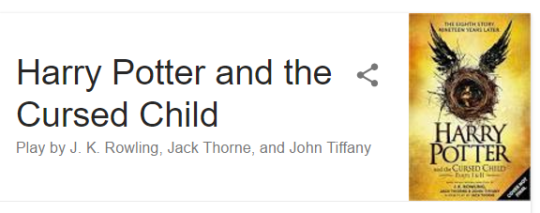


IM DYing what hAve I DonE


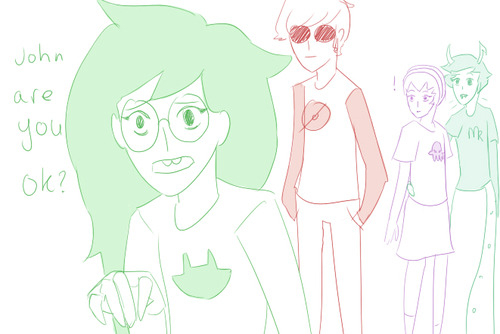
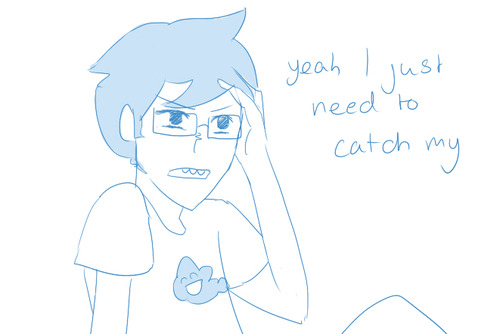
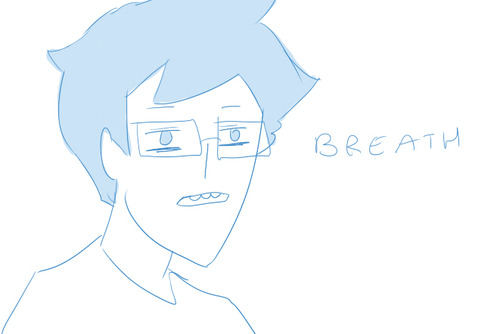








 queerhomestuck